
Showing posts with label artist. Show all posts
Showing posts with label artist. Show all posts
Sunday, July 19, 2015


Friday, June 19, 2015

Monday, May 11, 2015
Jason Seiler, to Receive 2015 Award from the American Academy of Art

Read more...
Image source: jasonseiler.com
Saturday, April 25, 2015
Andy Warhol
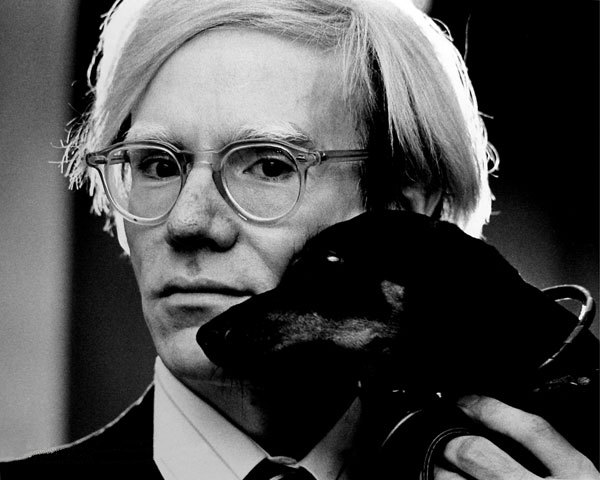


Warhol's art used many types of media, including hand drawing, painting, printmaking, photography, silk screening, sculpture, film, and music. He was also a pioneer in computer-generated art using Amiga computers that were introduced in 1984, two years before his death. He founded Interview Magazine and was the author of numerous books, including The Philosophy of Andy Warhol and Popism: The Warhol Sixties. He managed and produced the Velvet Underground, a rock band which had a strong influence on the evolution of punk rock music. He is also notable as a gay man who lived openly as such before the gay liberation movement. His studio, The Factory, was a famous gathering place that brought together distinguished intellectuals, drag queens, playwrights, Bohemian street people, Hollywood celebrities, and wealthy patrons.
Warhol has been the subject of numerous retrospective exhibitions, books, and feature and documentary films. He coined the widely used expression "15 minutes of fame". Many of his creations are very collectible and highly valuable. The highest price ever paid for a Warhol painting is US$105 million for a 1963 canvas titled "Silver Car Crash (Double Disaster)". A 2009 article in The Economist described Warhol as the "bellwether of the art market". Warhol's works include some of the most expensive paintings ever sold.
source: wikipedia
Saturday, June 30, 2012

Sunday, April 15, 2012

Wednesday, April 4, 2012
Bob Ross

Ross was born in Daytona Beach, Florida, and attended school until the ninth grade. Raised in Orlando, Florida, Ross enlisted in the U.S. Air Force at age 18 and was living in Florida early in his military career when the Air Force transferred him to Eielson AFB [in Alaska], where he first saw the snow and mountains that later became recurring themes in his artwork; he developed his quick-painting technique in order to be able to create art for sale in brief daily work breaks. Having held military positions that required him to be, in his own words, "mean" and "tough," "the guy who makes you scrub the latrine, the guy who makes you make your bed, the guy who screams at you for being late to work," Ross decided that if he ever moved on from the military, "it wasn't going to be that way any more," "vowing never to scream again". Ross discovered after beginning his sideline in painting that he was soon able to earn more from selling his work than from his Air Force position. After leaving the Air Force, he studied with Bill Alexander before becoming famous worldwide with his own television program, The Joy of Painting. Ross had a son, Steven, from his first marriage to Lynda Brown. Steven occasionally appeared on The Joy of Painting and is a Bob Ross–certified instructor. Ross and Lynda's marriage ended in divorce in 1981. Ross married again, this time to Jane. Jane died of cancer in 1993, and Ross himself battled lymphoma in his later years. In early 1994, Ross cancelled The Joy of Painting after its 11th season to continue battling the disease. On July 4, 1995, Ross died at home and was survived by his ex-wife Lynda, his son Steve, a half-brother, and a full brother. He is buried at Woodlawn Memorial Park in Gotha, Florida. Ross had a brother Jim, whom he mentioned in passing on his show.
Ross utilized the wet-on-wet oil painting technique, in which the painter continues adding paint on top of still wet paint rather than waiting a lengthy amount of time to allow each layer of paint to dry. Combining this method with the use of two inch and other types of brushes as well as painting knives allowed Ross to paint trees, water, clouds and mountains in a matter of seconds. Each painting would start with simple strokes that appeared to be nothing more than colored smudges. As he added more and more strokes, the blotches transformed into intricate landscapes. Ross dedicated the first episode of the second season of "The Joy of Painting with Bob Ross" to William Alexander, explaining that "years ago, Bill taught me this fantastic [wet-on-wet] technique, and I feel as though he gave me a precious gift, and I'd like to share that gift with you [the viewer]".
Ross noted that the landscapes he painted — typically mountains, lakes, snow, and log cabin scenes — were strongly influenced by his years living in Alaska, where he was stationed for the majority of his Air Force career. He repeatedly stated on the show his belief that everyone had inherent artistic talent and could become an accomplished artist given time, practice, and encouragement, and to this end was often fond of saying, "We don't have mistakes here, we just have happy accidents." Ross was well known for other catchphrases he used while painting as he crafted "happy little trees". In most episodes of The Joy of Painting, he noted that one of his favorite parts of painting was cleaning the brush, specifically his method of drying off a brush, which he had dipped in odorless thinner, by striking it against the thinner can and easel. He would smile and often laugh aloud as he "beat the devil out of it." He also used a palette which had been lightly sanded down which was necessary to avoid catching the reflections of strong studio lighting. At the end of each episode, Ross was known for saying, "so from all of us here, I'd like to wish you happy painting, God bless and goodbye my friend."
When asked about his laid-back approach to painting and eternally calm and contented demeanor, he once commented: "I got a letter from somebody here a while back, and they said, 'Bob, everything in your world seems to be happy.' That's for sure. That's why I paint. It's because I can create the kind of world that I want, and I can make this world as happy as I want it. Shoot, if you want bad stuff, watch the news."
source: wikipedia
Tuesday, February 7, 2012
David Choe


David Choe [born 1976, Los Angeles, California] is an American painter, muralist, graffiti artist and graphic novelist of Korean descent. He achieved art world success with his "dirty style" figure paintings—raw, frenetic works which combine themes of desire, degradation, and exaltation. Outside of galleries, he is closely identified with the bucktoothed whale he has been spray-painting on the streets since he was in his teens.
Choe's work appears in a wide variety of urban culture and entertainment contexts. For example, he provided the cover art for Jay-Z and Linkin Park's multi-platinum album Collision Course, and created artwork to decorate the sets of Juno and The Glass House. In 2005, internet entrepreneur Sean Parker, a longtime fan, asked him to paint graphic sexual murals in the interior of Facebook's first Silicon Valley office, and in 2007, Facebook CEO Mark Zuckerberg commissioned him to paint somewhat tamer murals for their next office. Although he thought the Facebook business model was "ridiculous and pointless," Choe, an inveterate gambler, chose to receive company stock in lieu of cash payment for the original Facebook murals. His shares were valued at approximately $200 million on the eve of Facebook's 2012 IPO. Those murals were loosely re-created by Choe's friends Rob Sato and Joe To for the set of the film The Social Network. During the 2008 presidential race, Choe painted a portrait of then-Senator Barack Obama for use in a grassroots street art campaign. The original was later displayed in the White House.
Choe's work appears in a wide variety of urban culture and entertainment contexts. For example, he provided the cover art for Jay-Z and Linkin Park's multi-platinum album Collision Course, and created artwork to decorate the sets of Juno and The Glass House. In 2005, internet entrepreneur Sean Parker, a longtime fan, asked him to paint graphic sexual murals in the interior of Facebook's first Silicon Valley office, and in 2007, Facebook CEO Mark Zuckerberg commissioned him to paint somewhat tamer murals for their next office. Although he thought the Facebook business model was "ridiculous and pointless," Choe, an inveterate gambler, chose to receive company stock in lieu of cash payment for the original Facebook murals. His shares were valued at approximately $200 million on the eve of Facebook's 2012 IPO. Those murals were loosely re-created by Choe's friends Rob Sato and Joe To for the set of the film The Social Network. During the 2008 presidential race, Choe painted a portrait of then-Senator Barack Obama for use in a grassroots street art campaign. The original was later displayed in the White House.
source: wikipedia
Thursday, September 1, 2011
Pablo Picasso
 |
| Pablo Picasso in 1962 |
 |
| Blue Nude |
 |
| Guernica |
 |
| Three Musicians |
 |
| Girl Before Mirror |
 |
| The Dream |
 |
| Boy with a Pipe |
 |
| Les Demoiselles d'Avignon |
 | ||
| Head Sculpture Chicago |
 |
| The Old Guitarist |
Pablo Diego José Francisco de Paula Juan Nepomuceno María de los Remedios Cipriano de la Santísima Trinidad Ruiz y Picasso known as Pablo Ruiz Picasso [Spanish pronunciation: [ˈpaβlo ˈrwiθ piˈkaso]; 25 October 1881 – 8 April 1973] was a Spanish painter, draughtsman, and sculptor who lived most of his life in France. He is widely known for co-founding the Cubist movement and for the wide variety of styles that he helped develop and explore. Among his most famous works are the proto-Cubist Les Demoiselles d'Avignon [1907] and Guernica [1937], a portrayal of the German bombing of Guernica during the Spanish Civil War.
Picasso demonstrated extraordinary artistic talent in his early years, painting in a realistic manner through his childhood and adolescence; during the first decade of the 20th century his style changed as he experimented with different theories, techniques, and ideas. His revolutionary artistic accomplishments brought him universal renown and immense fortune, making him one of the best-known figures in 20th century art.
“Art is a lie that makes us realize the truth”
-Pablo Picasso
source: wikipedia
Sunday, July 31, 2011
Friday, April 15, 2011
Piet Mondrian


He was an important contributor to the De Stijl art movement and group, which was founded by Theo van Doesburg. He evolved a non-representational form which he termed Neo-Plasticism. This consisted of white ground, upon which was painted a grid of vertical and horizontal black lines and the three primary colors.
Between his 1905 painting, The River Amstel, and his 1907 Amaryllis, Mondrian changed the spelling of his signature from Mondriaan to Mondrian.
Mondrian was born in Amersfoort in The Netherlands, the second of his parents' children. He was descended from Christian Dirkzoon Monderyan who lived in the Hague as early as 1670. The family moved to Winterswijk when his father, Pieter Cornelius Mondriaan, was appointed head teacher at a local primary school. Mondrian was introduced to art from a very early age: his father was a qualified drawing teacher, and with his uncle, Fritz Mondriaan [a pupil of Willem Maris of The Hague School of artists], the younger Piet often painted and drew along the river Gein.
After a strictly Protestant upbringing, in 1892, Mondrian entered the Academy for Fine Art in Amsterdam. He already was qualified as a teacher. He began his career as a teacher in primary education, but while teaching he also practiced painting. Most of his work from this period is naturalistic or impressionistic, consisting largely of landscapes. These pastoral images of his native country depict windmills, fields, and rivers, initially in the Dutch Impressionist manner of the Hague School and then in a variety of styles and techniques documenting his search for a personal style. These paintings are most definitely representational, and illustrate the influence that various artistic movements had on Mondrian, including pointillism and the vivid colors of fauvism.
On display in The Hague's Gemeentemuseum are a number of paintings from this period, including such post-impressionist works as The Red Mill and Trees in Moonlight. Another painting, Evening [Avond] [1908], a scene of haystacks in a field at dusk, even augurs future developments by using a palette consisting almost entirely of red, yellow, and blue. Although it is in no sense abstract, Avond is the earliest of Mondrian's works to emphasize the primary colors.
Piet Mondrian, View from the Dunes with Beach and Piers, Domburg, oil and pencil on cardboard, 1909, Museum of Modern Art, New York City
The earliest paintings that show an inkling of the abstraction to come are a series of canvases from 1905 to 1908, which depict dim scenes of indistinct trees and houses with reflections in still water. Although the end result leads the viewer to begin emphasizing the forms over the content, these paintings are still firmly rooted in nature, and it is only the knowledge of Mondrian's later achievements that leads one to search for the roots of his future abstraction in these works.
Mondrian's art always was intimately related to his spiritual and philosophical studies. In 1908 he became interested in the theosophical movement launched by Helena Petrovna Blavatsky in the late 19th century, and he joined the Dutch branch of the Theosophical Society in 1909. The work of Blavatsky and a parallel spiritual movement, Rudolf Steiner's Anthroposophy, significantly affected the further development of his aesthetic. Blavatsky believed that it was possible to attain a more profound knowledge of nature than that provided by empirical means, and much of Mondrian's work for the rest of his life was inspired by his search for that spiritual knowledge.
Mondrian and his later work were deeply influenced by the 1911 Moderne Kunstkring exhibition of Cubism in Amsterdam. His search for simplification is shown in two versions of Still Life with Ginger Pot [Stilleven met Gemberpot]. The 1911 version is Cubist, in the 1912 version it is reduced to a round shape with triangles and rectangles.
source: wikipedia
Thursday, February 24, 2011
Ben "BenCab" Cabrera


BenCab was born to Democrito Cabrera and Isabel Reyes in Malabon, Philippines on April 10, 1942. He was the youngest of nine children. BenCab's first exposure and discovery of the arts happened through his elder Brother Salvador, who was already an established artist during Bencab's childhood.
He went on to study at the University of the Philippines College of Fine Arts, where he explored different art visual forms - photography, draftsmanship, printmaking - while honing his chosen craft as a painter. He received his bachelor’s degree in Fine Arts in 1963.
BenCab met British writer Caroline Kennedy in 1966, and eventually married her in 1969. The couple decided to stay in London, where their three children were eventually born. The eldest, Elisar, was born in 1971 and is now a filmmaker based in London; Mayumi was born in 1973 and is now a model and actress living in Los Angeles; the youngest, Jasmine was born in 1977 and is now a London-based fashion stylist.
Bencab's first years as a painter in London "were not particularly easy", but his talents were immediately recognized. Over the next four decades, he established for himself a name of international importance, holding exhibitions from London to New York to Macau, and winning several major art awards in a career spanning four decades.
When BenCab returned to the Philippines in 1972, he was hailed as a Filipino pioneer of the arts and a significant influence among his peers. However, he returned to London once more in 1974, partly to get away from the tightening grip of Martial Law, which Ferdinand Marcos had declared in 1972. That event is said to have "marked the beginning of [BenCab]'s passionate involvement with social commentary and the topics of repression and freedom.
In 1985, however, BenCab's 13-year relationship with Kennedy ended in a painful divorce, and he eventually decided to come home to the Philippines.
BenCab eventually returned to the Philippines, and settled in the City of Baguio in Northern Luzon, eventually putting up a studio and a secluded little farm on Asin road, in the nearby town of Tuba, Benguet. He and a small group of fellow artists - visual artist Santi Bose, filmmaker Kidlat Tahimik, and sculptor Ben Hur Villanueva, among others, established the Baguio Arts Guild [BAG]. It was during this period in his career that BenCab began to more deeply explore the use handmade paper as a medium on which to work.
When the 1990 Luzon earthquake struck, BenCab and the BAG helped out by instituting programs such as the ArtAid workshop for traumatized children, and a fund-raising art auction they titled "Artquake." Bencab was elected president of the guild the following year.
Later in the 1990s, BenCab's input was a critical element in the creation of Tam-awan Village, "a refuge for local artists who desire a nurturing environment in which to develop their talents, and a community for all those who wish to take part in the harmonious fusion of art, culture, environment, and history.
BenCab also exhibited considerably during the last decade of the Millennium, also reaping many accolades. Among the most prominent of the many awards received by BenCab during this period was the Gawad CCP Para sa Sining [Cultural Center of the Philippines Award for the Arts] in 1992.
In 2006, the Philippine Government conferred upon him the Order of National Artist for Visual Arts.
source: wikipedia
Wednesday, February 23, 2011
Carlos "Botong" Francisco


Francisco was born on November 4, 1914 in Angono, Rizal. His parents were Felipe Francisco and Maria Villaluz. His hometown featured prominently in his paintings and murals, and he commemorated many rural scenes and town folk in his composition.
Botong came from very humble beginnings. In the early years he struggled even to acquire canvases to paint on. Together with Galo Ocampo and Victorio C. Edades, he formed the first group of modernists in Philippine art called "The Triumvirate", which struggled to break free from the cliched traditionalism of realist art pioneered by Fernando Amorsolo.
He tried his hand at illustrating everything, even the lowly Pinoy komiks, illustrating the Tagalog classic Siete Infantes de Lara in 1948.
Francisco is known for his masterful landmark murals that were specially commissioned by Malacañang Palace, Manila City Hall, Philippine General Hospital, and Fort Santiago. In them he exhibited bold composition and daring juxtaposition of elements that showcased his mastery of anatomy and lush tropical color.
His masterpieces include "Fiesta" [mural] at Malacañang and its smaller study [Paulino and Hetty Que collection], "Code of Kalantiao" [private collection], "Blood Compact," "First Mass at Limasawa," "The Martyrdom of Rizal," "Magpupukot, Bayanihan sa Bukid," "Stations of the Cross" [Far Eastern University], "Sandugo," "The Invasion of Limahong," "Serenade," and "Muslim Betrothal."
Botong is also known for discovering the Angono Petroglyphs, which are considered the oldest prehistoric artwork. This paleolithic art consists of 127 human and animal figures that are estimated to date back to 3000 BC. Presidential Decree 260 was issued in 1996 and declared the petroglyphs a national cultural treasure. The National Museum established a museum on its site.
He was posthumously conferred the title National Artist of the Philippines in Visual Arts in 1973. He died on March 31, 1969, leaving a rich legacy and a new generation of followers. On November 4, 1975, the town of Angono, Rizal, held an exhibit titled "Gunita Kay Botong." The event became an annual institution and was widely followed to the point that Angono became the unofficial art capital of the Philippines.
source: wikipilipinas
Tuesday, February 22, 2011
Vicente Manansala


Manansala was born in Macabebe, Pampanga. From 1926 to 1930, he studied at the U.P. School of Fine Arts. In 1949, Manansala received a six-month grant by UNESCO to study at the Ecole de Beaux Arts in Banff and Montreal, Canada. In 1950, he received a nine-month scholarship to study at the Ecole de Beaux Arts in Paris by the French government.
Manansala's canvases were described as masterpieces that brought the cultures of the barrio and the city together. His Madonna of the Slums is a portrayal of a mother and child from the countryside who became urban shanty residents once in the city. In his Jeepneys, Manansala combined the elements of provincial folk culture with the congestion issues of the city.
Manansala developed transparent cubism, wherein the "delicate tones, shapes, and patterns of figure and environment are masterfully superimposed". A fine example of Manansala using this "transparent and translucent" technique is his composition, Kalabaw [Carabao].
Vicente Manansala, a National Artist of the Philippines in Visual Arts, was a direct influence to his fellow Filipino neo-realists: Malang, Angelito Antonio, Norma Belleza and Baldemor. The Honolulu Academy of Arts, the Lopez Memorial Museum [Manila], the Philippine Center [New York City] and the Singapore Art Museum are among the public collections holding work by Vicente Manansala.
source: wikipedia
Monday, February 21, 2011
Jose Joya


Joya was a mixed media artist, printmaker, multimedia artist, and a former dean of the University of the Philippines' College of Fine Arts. He pioneered abstract expressionism in the Philippines with paintings characterized by the vigorous and spontaneous strokes of action and gestural painting. He typically made use of impasto, sweeping brushstrokes and rice paper collage in his powerful and vibrant works.
The color schemes of his works were strongly influenced by the tropical landscapes of the Philippine Islands. Among his masterpieces are the Nanking [a collage rendered with Asian calligraphy and forms and patterns resembling rice paddies], the Granadean Arabesque [his large landmark work, 1958], Space Transfiguration, Hills of Nikko, Dimension of Fear, Torogan, Cityscape. He represented the Philippines in the 1964 Venice Biennial, a recognition which showed the high level of acceptance of Philippine modern art had by then attained.
Joya influenced younger artists in making use of multimedia in art. He also worked on ceramics and in printmaking and other graphic arts. His works, especially his mixed-media abstracts, continue to be known for their distinctive style and consistent excellence.
source: wikipilipinas
Monday, February 7, 2011
joey de leon

De Leon was the second child of Jose Seoane de Leon [1918–2008], of Filipino-Spanish descent, and Emma Manahan Ramos. His paternal grandfather was the first mayor of Malolos, Bulacan. His parents divorced at a young age. At the age of three, his father moved to Madrid, Spain.
Prior to being an entertainer, de Leon earned his architecture degree from the National University in Manila. He was also a disc jockey for 12 radio stations when he was starting out.
Joey de Leon has five children. With first wife actress Daria Ramirez, he has two children, Joseph Joachim (Keempee) and Jacinda Myrtle. He married actress Eileen Macapagal. Their union produced three children, Jocas Eightria, Jako and Jio. De Leon also has three grandchildren from eldest daughter Cheenee and one granddaughter from Keempee.
He started out his showbiz career in the 1960s as a radio disc jockey. His first big break on TV was Intercontinental Broadcasting Corporation's gag show OK Lang.
In 1975, de Leon became a co-host of GMA Network's early afternoon variety show Discorama hosted by Bobby Ledesma. He invited his former co-stars at OK Lang, brothers Tito, Vic and Val Sotto, to join him at Discorama. Only Tito and Vic accepted Joey's invitation. The newly-formed trio started to do comedy newscast segments interspersed with Top 40 hit-song parodies. The trio was soon invited to become part of the show Student Canteen as they released 12 albums based on their Discorama Tough Hits segment.
Although Tito, Vic and Joey started their trio via Discorama and Student Canteen, it was the sitcom Iskul Bukol that gave them nationwide fame as comedians. Soon after, other TV and movie producers came knocking on the trio's door. In 1979, Tito, Vic and Joey started hosting for the noontime show Eat Bulaga! which was pitted against the more established Student Canteen hosted by their former colleague [and now competitor] Bobby Ledesma. Not long after, Eat Bulaga! toppled Student Canteen from the ratings.
Although de Leon continued to do movies alongside his showbiz team mates Tito and Vic, he started doing solo performances for other TV shows. He top billed Joey and Son in the '80s, a sitcom on RPN where he played father. He was also one of the gag performers on TODAS where his co-stars included Jimmy Santos and Val Sotto. Other TV shows included Apple Pie, Patis, Atbp., The Sharon Cuneta Show, and Let's Go Crazy. He was launched by Viva Films as a solo comedian in She-Man: Mistress of the Universe. He also tried his hand at directing movies like Romeo Loves Juliet and Small, Medium, Large.
Wednesday, February 2, 2011
jim paredes

Jaime Ramon "Jim" Paredes [born 31 August 1951] is a Filipino musician, producer, educator, writer, television personality, workshop facilitator, and activist best known for being one-third of the APO Hiking Society, along with Danny Javier and Boboy Garovillo.
Paredes' most prominent solo work is 1986' "Handog ng Pilipino sa Mundo", which has come to be known as the anthem of the bloodless 1986 People Power Revolution. It was recorded by 15 Filipino artists in April of that year, and its English version "A New and Better Way" was launched in Australia a few months later. In recognition of its significance, the lyrics of the song are embedded on a wall of the Our Lady of Edsa Shrine, which commemorates the 1986 revolution.
Sunday, January 30, 2011
Saturday, January 29, 2011
Cesar Legaspi


[source: wikipedia]
Si Cesar Torrente Legaspi [1917-1994], ay pinarangalan bilang isang Pambansang Alagad ng Sining noong 1990, at siyang itinuturing na nagpasimula ng neo-realism sa Pilipinas at nagpaunlad ng cubism sa bansa.
Bilang isa sa Thirteen Moderns at kabilang sa mga naunang Neo-Realist, nagkaroon ng malakas na impluwensiya sa paglago ng cubism sa Pilipinas si Legaspi. Ang mga nilikha niyang social-realist na nagpapakita ng mga pulubi sa siyudad at mga manggagawa ay maituturing na expressionist dahil sa paggamit niya ng gula-gulanit na porma. Ang kanyang mga likha ay hindi lang ilan sa mga naunang gawa na moderno; nakatulong ang mga ito na matanggap ang modernong arte sa Pilipinas.
Siya rin ay naging ilustrador sa magasin at naging artistic director sa ilang ahensiya habang siya ay gumuguhit ng kanyang mga obra.
[source: wikipilipinas]
Subscribe to:
Posts (Atom)