

Tuesday, January 22, 2013


Monday, January 21, 2013


Sunday, January 13, 2013

Wednesday, December 26, 2012
Wednesday, December 5, 2012


Friday, November 23, 2012
CGChallenge XXVII: TEN

CGSociety is celebrating our first ten years as the
premier site for CG artists worldwide. As part of the celebration we
challenge you to incorporate the number ten into an image or video,
whether literally or symbolically.
It could be a child counting to 10 for the first time, a parody of the movie 10, a play on words (tentacles, tenacious, tenant), the Ten commandments, ten minutes to save the world, remember when you were ten (imaginary friends, bullies, nightmares, dreams for the future), what happened ten years ago, the power of ten.
It could be 2D or 3D, image or video, and produced on any software. Make it hilarious or make it epic, just make sure it cleverly adds the number, idea, word or symbol of ten. It is CGChallenge XXVII, and it’s going to be big!
source link: challenge.cgsociety.org/ten
It could be a child counting to 10 for the first time, a parody of the movie 10, a play on words (tentacles, tenacious, tenant), the Ten commandments, ten minutes to save the world, remember when you were ten (imaginary friends, bullies, nightmares, dreams for the future), what happened ten years ago, the power of ten.
It could be 2D or 3D, image or video, and produced on any software. Make it hilarious or make it epic, just make sure it cleverly adds the number, idea, word or symbol of ten. It is CGChallenge XXVII, and it’s going to be big!
source link: challenge.cgsociety.org/ten
Monday, October 1, 2012
29 Ways to Stay Creative
Motion Graphics:
TO-FU
web http://www.to-fu.tv
twitter http://twitter.com/tofu_design
Facebook http://www.facebook.com/TOFU.design
Reference:
http://paulzii.tumblr.com/post/3360025995
Music:
Fairest of them all (#)
by Kämmerer
http://www.jamendo.com/en/track/751979
TO-FU
web http://www.to-fu.tv
twitter http://twitter.com/tofu_design
Facebook http://www.facebook.com/TOFU.design
Reference:
http://paulzii.tumblr.com/post/3360025995
Music:
Fairest of them all (#)
by Kämmerer
http://www.jamendo.com/en/track/751979
Friday, September 28, 2012
UFO Robot Grendizer

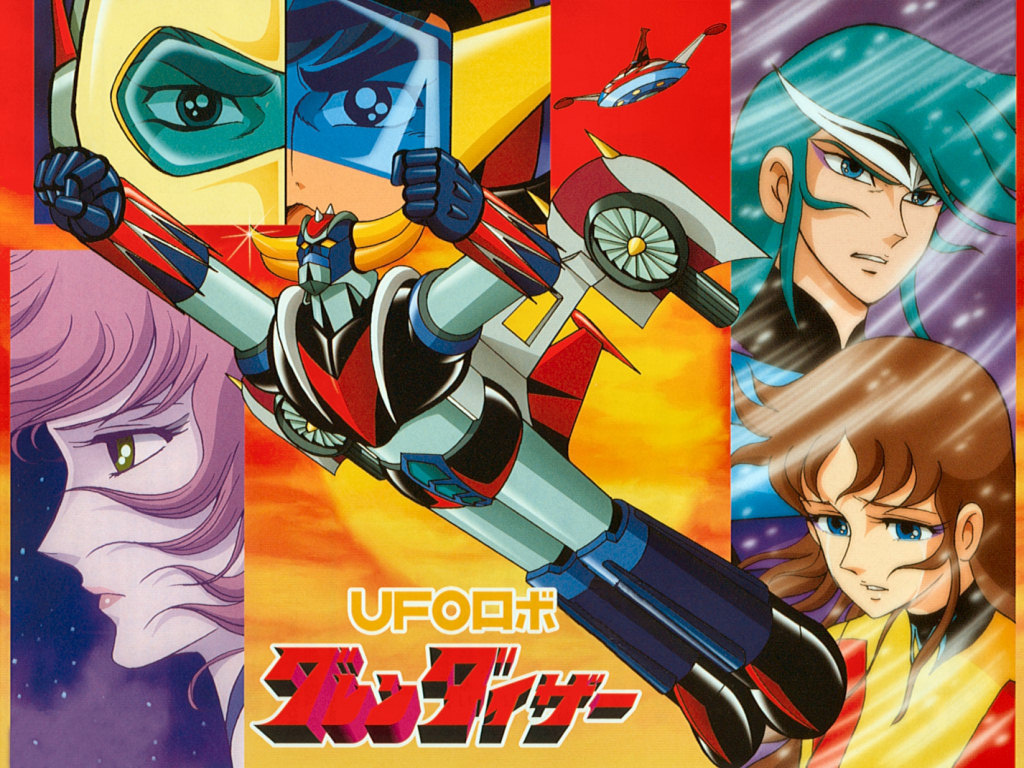

UFO Robot Grendizer [UFOロボ·グレンダイザー UFO Robo Gurendaizā?, sometimes romanized as UFO Robo Grendizer] is a super robot TV anime and manga created by manga artist Go Nagai. It is the third entry in the Mazinger trilogy. It was broadcast on Japanese television from October 5, 1975, to February 27, 1977, and lasted 74 episodes. The robot's first appearance in the United States was as a part of the Shogun Warriors line of super robot toys imported in the late 1970s by Mattel, then in Jim Terry's Force Five series, both under the title Grandizer. It is still widely popular in the Middle East, and it was especially popular in France and Quebec, as well as among French speaking Canadians in the province of New Brunswick, where it was aired under the title Goldorak. In Italy, the series was as popular and known as Goldrake.
source: wikipedia
Friday, September 21, 2012
Mazinger Z
.jpg)


Mazinger Z is an enormous Super Robot, constructed with a fictitious metal called Super-Alloy Z [超合金Z Chōgokin Zetto?], which is forged from a new element [Japanium] mined from a reservoir found only in the sediment of Mt. Fuji, in Japan. The mecha was built by Professor Juzo Kabuto as a secret weapon against the forces of evil, represented in the series by the Mechanical Beasts [mecha used for evil purposes] of Dr. Hell. The latter was the German member of a Japanese archeological team, which discovered ruins of a lost pre-Grecian civilization on an island named Bardos [or Birdos, although some inconsistent translations have identified the island as being the actual Greek island of Rhodes]; the civilization was loosely based on the ancient Mycenae, and was called the Mycéne Empire in the series. One of their findings was that the Mycene used an army of steel titans about 20 meters in height [compare with the Greek legend of Talos]. Finding prototypes of those titans underground which could be remote-controlled and realizing their immense power on the battlefield, Dr. Hell goes insane and has all the other scientists of his research team killed except for Professor Kabuto, who manages to escape. The lone survivor goes back to Japan and attempts to warn the world of its imminent danger. Meanwhile, Dr. Hell establishes his headquarters on a mobile island, and plans to use the Mechanical Beasts to become the new ruler of the world. To counter this, Kabuto constructs Mazinger Z and manages to finish it just before being killed by a bomb planted by Hell’s right-hand 'man', Baron Ashura, a half-man, half-woman being. As he is dying, he manages to inform his grandson Kouji Kabuto about the robot and its use. Kouji becomes the robot’s pilot, and from that point on battles both the continuous mechanical monsters, and the sinister henchmen sent by Doctor Hell in every episode.
source: wikipedia
Friday, September 14, 2012
Old Master Q
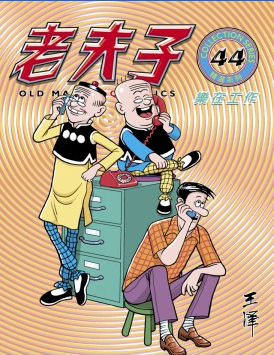

Old Master Q [Chinese: 老夫子; pinyin: Lǎo Fū Zi] is a popular Chinese manhua created by Alfonso Wong. The cartoon first appeared in the newspapers and magazines in Hong Kong in 1962, and later serialized in 1964. The comic is still in publication today.
The series features the now well-known characters such as Old Master Q and Big Potato, as well as Mr Chin, Mr Chiu and Miss Chan, in many different hilarious situations. They are usually portrayed in a variety of social statuses, professions and time periods, ranging from beggars and office workers to actors and ancient warriors, allowing a wide variety of settings and ideas. More outlandish scenarios include close encounters with aliens, ghost sightings and the afterlife.
In the context of the strips, Old Master Q, Big Potato and Mr. Chin are close friends; Mr. Chiu often play an antagonistic role toward the trio; finally, Miss Chan is often portrayed as a love interest to Old Master Q. The comic is now copyrighted by WangZ Inc, a company established by Joseph Wong Chak [Alfonso Wong's eldest son] in Taipei, Taiwan.
The series features the now well-known characters such as Old Master Q and Big Potato, as well as Mr Chin, Mr Chiu and Miss Chan, in many different hilarious situations. They are usually portrayed in a variety of social statuses, professions and time periods, ranging from beggars and office workers to actors and ancient warriors, allowing a wide variety of settings and ideas. More outlandish scenarios include close encounters with aliens, ghost sightings and the afterlife.
In the context of the strips, Old Master Q, Big Potato and Mr. Chin are close friends; Mr. Chiu often play an antagonistic role toward the trio; finally, Miss Chan is often portrayed as a love interest to Old Master Q. The comic is now copyrighted by WangZ Inc, a company established by Joseph Wong Chak [Alfonso Wong's eldest son] in Taipei, Taiwan.
source: wikipedia
links:
Friday, September 7, 2012
Voltes V


Chōdenji Machine Voltes V [超電磁マシーン ボルテスV Chōdenji Mashīn Borutesu Faibu?, Super Electromagnetic Machine Voltes Five] is a Japanese anime television series that was first aired on TV Asahi starting June 4, 1977. It was created by Saburo Yatsude (a pseudonym referring to a committee within Toei Company) and directed by Tadao Nagahama. Voltes V is the second part of the Robot Romance Trilogy of the Super Robot genre which includes Chōdenji Robo Combattler V and Tōshō Daimos. Like Combattler V, the series was animated by Sunrise and produced by Toei Company. The series was animated by Sunrise on Toei's behalf. This super robot along with the other two aforementioned super robots first appeared the USA as a part of Mattel's Shogun Warriors line of import toys, released in the late 1970s.
Voltes V narrates the heroic exploits of the young robot pilots known as The Voltes Team and their trials against alien invaders from the planet Boazan. Armed with the Super Electromagnetic Machine Voltes V, the five pilots drive back the invaders one Beast Fighter at a time. The series is different from typical super robot anime of the time in that it illustrates human sentimentality and common values, with underlying themes such as the love of family, equality, selfless sacrifice, team work, and patriotism.
Voltes V is a work that has a heavy revolutionary undertone. The series ends with Voltes V's spectacular counterattack on planet Boazan to liberate the slaves from the oppression of a tyrannical ruler, Emperor Zu Zambojil. After Voltes V, Tadao Nagahama directed the TV anime version of Rose of Versailles, which leaves speculation that perhaps Voltes V was influenced by Nagahama's research on the French Revolution for his future project. The theme of enslaved population rising up to overthrow an aristocracy lend support to theory.
Voltes V's arsenal consists of variety of missiles, a bazooka, beams, and weapons such as Chōdenji Top [Similar to the Chōdenji Yo-Yo of Combattler V] and Tenkūken [天空剣 Sky Sword, "Laser Sword" in the English dub, "Excalibur" in the Italian dub]. With Tenkūken, Voltes V marks the enemy's final moments with a signature "V" slash. This established it as one of the first super robots to use a sword in its finishing attack.
Voltes V deviates from the robotic design of the Combattler V. Voltes V's plot has a more serious tone than the comedic storyline of Combattler V. Voltes V also follows a formula similar to that of Daimos.
Voltes V narrates the heroic exploits of the young robot pilots known as The Voltes Team and their trials against alien invaders from the planet Boazan. Armed with the Super Electromagnetic Machine Voltes V, the five pilots drive back the invaders one Beast Fighter at a time. The series is different from typical super robot anime of the time in that it illustrates human sentimentality and common values, with underlying themes such as the love of family, equality, selfless sacrifice, team work, and patriotism.
Voltes V is a work that has a heavy revolutionary undertone. The series ends with Voltes V's spectacular counterattack on planet Boazan to liberate the slaves from the oppression of a tyrannical ruler, Emperor Zu Zambojil. After Voltes V, Tadao Nagahama directed the TV anime version of Rose of Versailles, which leaves speculation that perhaps Voltes V was influenced by Nagahama's research on the French Revolution for his future project. The theme of enslaved population rising up to overthrow an aristocracy lend support to theory.
Voltes V's arsenal consists of variety of missiles, a bazooka, beams, and weapons such as Chōdenji Top [Similar to the Chōdenji Yo-Yo of Combattler V] and Tenkūken [天空剣 Sky Sword, "Laser Sword" in the English dub, "Excalibur" in the Italian dub]. With Tenkūken, Voltes V marks the enemy's final moments with a signature "V" slash. This established it as one of the first super robots to use a sword in its finishing attack.
Voltes V deviates from the robotic design of the Combattler V. Voltes V's plot has a more serious tone than the comedic storyline of Combattler V. Voltes V also follows a formula similar to that of Daimos.
Saturday, September 1, 2012
DX Daimos


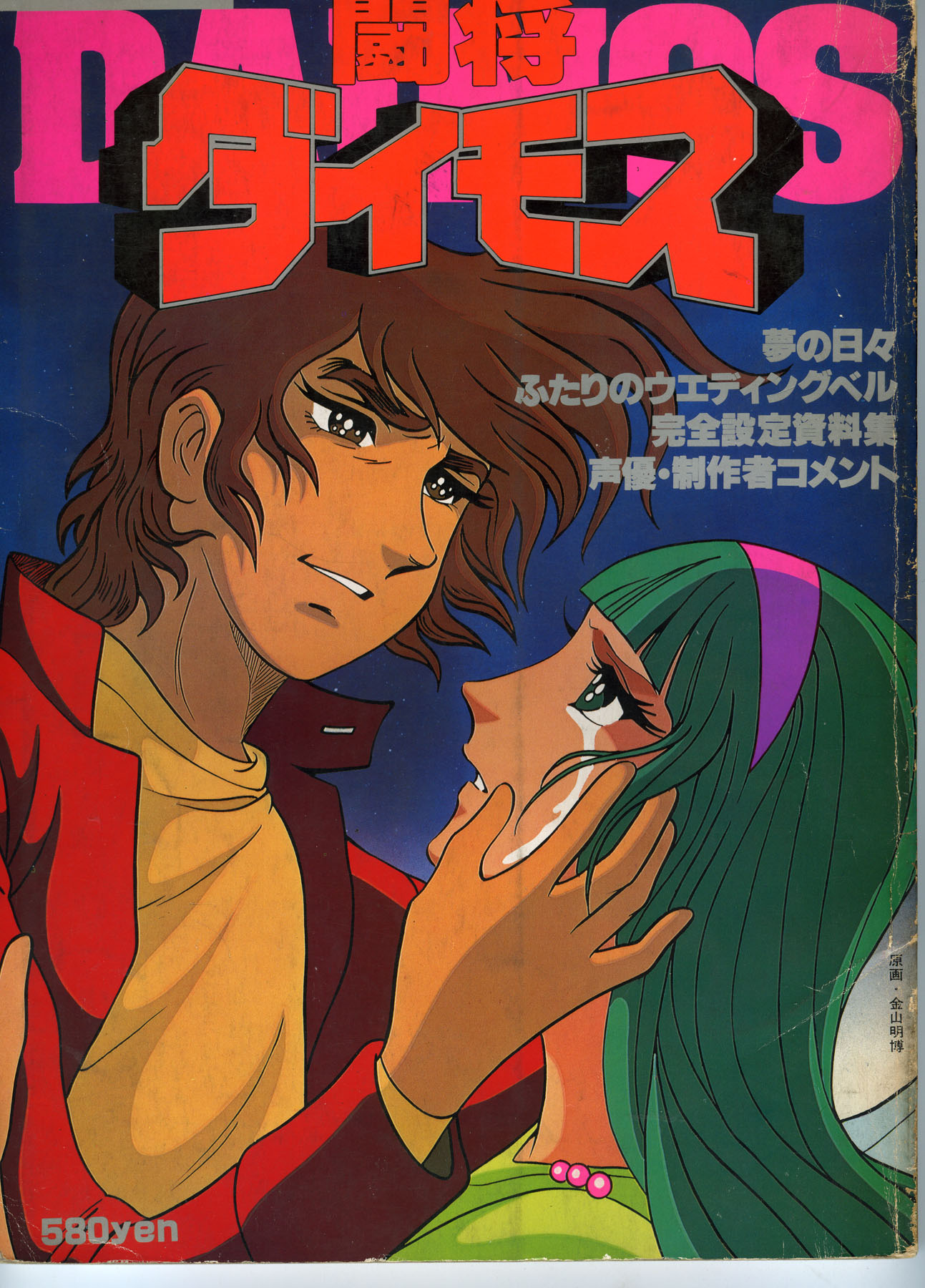
Tōshō Daimos [闘将ダイモス Tōshō Daimosu?, Brave Leader (or Fighting King or Battle Commander) Daimos] is a Japanese anime television series produced by Sunrise. Daimos is the third installment of the "Romantic Trilogy", following Chōdenji Robo Combattler V and Chōdenji Machine Voltes V. It ran from 1 April 1978 to 27 January 1979 and consisted of 44 episodes. A movie with the pivotal episodes strung together titled Starbirds was released in the US by the same company that released Tranzor Z. The name Daimos is derived from Deimos, one of the two moons of Mars. Outside of Japan, the show also aired in the Philippines, Malaysia, Thailand and Italy. In the early 1980s there was a VHS release in France, but only the first seven episodes were available. In the 1990s, the entire series was shown in Poland [although with Polish voiceover, the Italian dubbing could be heard in background].
Tadao Nagahama, who directed the series, is often miscredited as the "creator" of the trilogy. It was actually created by "Saburo Yatsude," best known to American fans as the creator of Voltron [Golion in its original Japanese].
"Saburo Yatsude" is not a real person. Similar to "Hajime Yatate", the name is a pseudonym which refers to the collective staff of Toei Co. Ltd [specifically, the main Toei division, as opposed to the animation divisio]). The series was animated by Sunrise on Toei's behalf.
The first appearance of Daimos in the United States was in the late 1970s as a part of Mattel's Shogun Warriors line of imported Super Robot toys.
Tadao Nagahama, who directed the series, is often miscredited as the "creator" of the trilogy. It was actually created by "Saburo Yatsude," best known to American fans as the creator of Voltron [Golion in its original Japanese].
"Saburo Yatsude" is not a real person. Similar to "Hajime Yatate", the name is a pseudonym which refers to the collective staff of Toei Co. Ltd [specifically, the main Toei division, as opposed to the animation divisio]). The series was animated by Sunrise on Toei's behalf.
The first appearance of Daimos in the United States was in the late 1970s as a part of Mattel's Shogun Warriors line of imported Super Robot toys.
source: wikipedia
Thursday, August 23, 2012
Friday, August 10, 2012

Tuesday, August 7, 2012
Wednesday, August 1, 2012


Friday, July 13, 2012

Thursday, July 12, 2012
Talentadong Pidol
This is something cool:), my Dolphy caricature is one of the images in the backdrop of this tv special:)


Wednesday, July 4, 2012

Tuesday, July 3, 2012


Monday, July 2, 2012

Sunday, July 1, 2012
Principles of Visual Art
The principles of visual art are the rules, tools and/or guidelines that artists use to organize the elements of art in an artwork. When successfully combined with the elements of art they aid in creating an aesthetically pleasing or interesting work of art. Some principles of art that have been identified are movement, unity, harmony, variety, balance, rhythm, emphasis, contrast, proportion, and pattern. This list may vary, according to the art educator, but encompasses the generally accepted principles. Rhythm and pattern are often combined in art education texts.
Movement shows actions, or alternatively, the path the viewer's eye follows throughout an artwork. Movement is caused by using elements under the rules of the principles in picture to give the feeling of motion and to guide the viewer's eyes throughout the artwork. In movement an art should flow, because the artist has the ability to control the viewer's eye. The artists control what the viewers see and how they see it, like a path leading across the page to the item the artist wants the viewer's attention focused on. Techniques such as scale and proportion can be used to create an effect of movement in a visual artwork. For instance, an element that is further into the background is smaller in scale and lighter in value. The same element repeated in different places within the same image can also demonstrate the passing of time or movement.
Unity is the wholeness that is achieved through the effective use of the elements and principles of art. The arrangement of elements and principles to create a feeling of completeness. Generally, a work of art is strengthened by a sense of unity in form and composition. Works where all of the elements seem to visually fit together allows the whole to become greater than its parts. Likewise, this term can also be applied to the concept behind the artwork. An analogy would be the way in which a conductor directs a wide variety of instruments in an orchestra to produce a symphony that is recognized as a single comprehensible piece.
Harmony is achieved in a body of work by using similar elements throughout the work, harmony gives an uncomplicated look to a piece of artwork or sculpture. Color Harmony or Color Theory is also considered a principle through the application of the design element of color.
Variety is the quality or state of having different forms or types, notable use of contrast, emphasis, difference in size and color.
Balance is arranging elements so that no one part of a work overpowers, or seems heavier than any other part. The three different kinds of balance are symmetrical, asymmetrical, and radial. Symmetrical (or formal) balance is the most stable, in a visual sense. When both sides of an artwork on either side of the horizontal or vertical axis of the picture plane are exactly (or nearly exactly the same) the work is said to exhibit this type of balance. The asymmetrical balance is the balance that does not weigh equally on both sides. Pieces of art that display radial balance have elements equally distributed from a center point. Radial balance also is very difficult at times and if not at the same equal lengths it might appear untidy so one must be careful when doing radial balance.
Contrast is created by using elements that conflict with one another. Often, contrast is created using complementary colors or extremely light and dark values. Contrast creates interest in a piece and often draws the eye to certain areas. It is used to make a painting more visually interesting.
Proportion is a measurement of the size and quantity of elements within a composition. In ancient arts, proportions of forms were enlarged to show importance. This is why Egyptian gods and political figures appear so much larger than common people. The ancient Greeks found fame with their accurately-proportioned sculptures of the human form. Beginning with the Renaissance, artists recognized the connection between proportion and the illusion of 3-dimensional space.
Pattern and rhythm (also known as repetition) is showing consistency with colors or lines. Putting a red spiral at the bottom left and top right, for example, will cause the eye to move from one spiral, to the other, and everything in between. It is indicating movement by the repetition of elements. Rhythm can make an artwork seem active.
source: wikipedia
Movement shows actions, or alternatively, the path the viewer's eye follows throughout an artwork. Movement is caused by using elements under the rules of the principles in picture to give the feeling of motion and to guide the viewer's eyes throughout the artwork. In movement an art should flow, because the artist has the ability to control the viewer's eye. The artists control what the viewers see and how they see it, like a path leading across the page to the item the artist wants the viewer's attention focused on. Techniques such as scale and proportion can be used to create an effect of movement in a visual artwork. For instance, an element that is further into the background is smaller in scale and lighter in value. The same element repeated in different places within the same image can also demonstrate the passing of time or movement.
Unity is the wholeness that is achieved through the effective use of the elements and principles of art. The arrangement of elements and principles to create a feeling of completeness. Generally, a work of art is strengthened by a sense of unity in form and composition. Works where all of the elements seem to visually fit together allows the whole to become greater than its parts. Likewise, this term can also be applied to the concept behind the artwork. An analogy would be the way in which a conductor directs a wide variety of instruments in an orchestra to produce a symphony that is recognized as a single comprehensible piece.
Harmony is achieved in a body of work by using similar elements throughout the work, harmony gives an uncomplicated look to a piece of artwork or sculpture. Color Harmony or Color Theory is also considered a principle through the application of the design element of color.
Variety is the quality or state of having different forms or types, notable use of contrast, emphasis, difference in size and color.
Balance is arranging elements so that no one part of a work overpowers, or seems heavier than any other part. The three different kinds of balance are symmetrical, asymmetrical, and radial. Symmetrical (or formal) balance is the most stable, in a visual sense. When both sides of an artwork on either side of the horizontal or vertical axis of the picture plane are exactly (or nearly exactly the same) the work is said to exhibit this type of balance. The asymmetrical balance is the balance that does not weigh equally on both sides. Pieces of art that display radial balance have elements equally distributed from a center point. Radial balance also is very difficult at times and if not at the same equal lengths it might appear untidy so one must be careful when doing radial balance.
Contrast is created by using elements that conflict with one another. Often, contrast is created using complementary colors or extremely light and dark values. Contrast creates interest in a piece and often draws the eye to certain areas. It is used to make a painting more visually interesting.
Proportion is a measurement of the size and quantity of elements within a composition. In ancient arts, proportions of forms were enlarged to show importance. This is why Egyptian gods and political figures appear so much larger than common people. The ancient Greeks found fame with their accurately-proportioned sculptures of the human form. Beginning with the Renaissance, artists recognized the connection between proportion and the illusion of 3-dimensional space.
Pattern and rhythm (also known as repetition) is showing consistency with colors or lines. Putting a red spiral at the bottom left and top right, for example, will cause the eye to move from one spiral, to the other, and everything in between. It is indicating movement by the repetition of elements. Rhythm can make an artwork seem active.
source: wikipedia
Saturday, June 30, 2012

Friday, June 1, 2012
Story Telling from Pixar

by Director and Pixar storyboard artist Emma Coats
1. You admire a character for trying more than for their successes.
2. You gotta keep in mind what’s interesting to you as an audience, not what’s fun to do as a writer. They can be v. different.
3. Trying for theme is important, but you won’t see what the story is actually about til you’re at the end of it. Now rewrite.
4. Once upon a time there was ___. Every day, ___. One day ___. Because of that, ___. Because of that, ___. Until finally ___.
5. Simplify. Focus. Combine characters. Hop over detours. You’ll feel like you’re losing valuable stuff but it sets you free.
6. What is your character good at, comfortable with? Throw the polar opposite at them. Challenge them. How do they deal?
7. Come up with your ending before you figure out your middle. Seriously. Endings are hard, get yours working up front.
8. Finish your story, let go even if it’s not perfect. In an ideal world you have both, but move on. Do better next time.
9. When you’re stuck, make a list of what WOULDN’T happen next. Lots of times the material to get you unstuck will show up.
10. Pull apart the stories you like. What you like in them is a part of you; you’ve got to recognize it before you can use it.
11. Putting it on paper lets you start fixing it. If it stays in your head, a perfect idea, you’ll never share it with anyone.
12. Discount the 1st thing that comes to mind. And the 2nd, 3rd, 4th, 5th – get the obvious out of the way. Surprise yourself.
13. Give your characters opinions. Passive/malleable might seem likable to you as you write, but it’s poison to the audience.
14. Why must you tell THIS story? What’s the belief burning within you that your story feeds off of? That’s the heart of it.
15. If you were your character, in this situation, how would you feel? Honesty lends credibility to unbelievable situations.
16. What are the stakes? Give us reason to root for the character. What happens if they don’t succeed? Stack the odds against.
17. No work is ever wasted. If it’s not working, let go and move on – it’ll come back around to be useful later.
18. You have to know yourself: the difference between doing your best & fussing. Story is testing, not refining.
19. Coincidences to get characters into trouble are great; coincidences to get them out of it are cheating.
20. Exercise: take the building blocks of a movie you dislike. How d’you rearrange them into what you DO like?
21. You gotta identify with your situation/characters, can’t just write ‘cool’. What would make YOU act that way?
22. What’s the essence of your story? Most economical telling of it? If you know that, you can build out from there.
source: nofilmschool.com
Friday, May 25, 2012
AG Sano


The Cove Inspires Filipino Mural Artist AG Sano
Dolphin lovers in the Philippines have reason to rejoice as The Cove -
an award winning documentary featuring the annual slaughter of dolphins
in Taiji, Japan - has inspired local mural artist AG Sano to paint
23,000 images of dolphins. [read more...]
Wednesday, May 16, 2012
leonardo di caprio

Leonardo Wilhelm DiCaprio [pronounced /dɨˈkæpri.oʊ/; born November 11, 1974] is an American actor and film producer. He has been nominated for the Golden Globe Award eight times as an actor, and won the Golden Globe Award for Best Actor for his performance in The Aviator [2004]. He has also been nominated by the Academy Awards, Screen Actors Guild and the British Academy of Film and Television Arts.
Born and raised in Los Angeles, California, DiCaprio started his career by appearing in television commercials prior to landing recurring roles in TV series such as the soap opera Santa Barbara and the sitcom Growing Pains in the early 1990s. He made his film debut in the comedic sci-fi horror film Critters 3 [1991] and received first notable critical praise for his performance in This Boy's Life [1993]. DiCaprio obtained recognition for his subsequent work in supporting roles in What's Eating Gilbert Grape [1993] and Marvin's Room [1996], as well as leading roles in The Basketball Diaries [1995] and Romeo + Juliet [1996], before achieving international fame in James Cameron's Titanic [1997].
Since the 2000s, DiCaprio has been nominated for awards for his work in such films as Catch Me If You Can [2002], Gangs of New York [2002], The Aviator [2004], Blood Diamond [2006], The Departed [2006], and Revolutionary Road [2008]. His latest films Shutter Island [2010] and Inception [2010] rank among the biggest commercial successes of his career. DiCaprio owns a production company named Appian Way Productions, whose productions include the films Gardener of Eden [2007] and Orphan [2009]. A committed environmentalist, DiCaprio has received praise from environmental groups for his activism.
source: wikipedia
Tuesday, May 8, 2012
Pedro Campos


Hyperrealism is a genre of painting and sculpture resembling a high-resolution photograph. Hyperrealism is considered an advancement of Photorealism by the methods used to create the resulting paintings or sculptures. The term is primarily applied to an independent art movement and art style in the United States and Europe that has developed since the early 2000s.
source: wikipedia
see more of Pedro Campos.
Saturday, May 5, 2012

Sunday, April 29, 2012
Ron Mueck


Ronald "Ron" Mueck [English pronunciation: /mjuːɛk/ or /muːɪk/; born 1958, Melbourne] is an Australian hyperrealist sculptor working in the United Kingdom.
Early work:
Ron Mueck began his career working on the Australian children's television program Shirl's Neighbourhood. He was the creative director and made, voiced and operated the puppets Greenfinger the Garden Gnome, Ol' Possum, Stanley the snake and Claude the Crow amongst many others. The show was made for Channel 7 Melbourne between 1979 and 1984, broadcast nationally and starred the ex-lead singer of Skyhooks, Graeme "Shirley" Strachan.
Mueck's early career was as a model maker and puppeteer for children's television and films, notably the film Labyrinth for which he also contributed the voice of Ludo, and the Jim Henson series The Storyteller.
Mueck moved on to establish his own company in London, making photo-realistic props and animatronics for the advertising industry. Although highly detailed, these props were usually designed to be photographed from one specific angle hiding the mess of construction seen from the other side. Mueck increasingly wanted to produce realistic sculptures which looked perfect from all angles.
Sculptor:
In 1996 Mueck transitioned to fine art, collaborating with his mother-in-law, Paula Rego, to produce small figures as part of a tableau she was showing at the Hayward Gallery. Rego introduced him to Charles Saatchi who was immediately impressed and started to collect and commission work. This led to the piece which made Mueck's name, Dead Dad, being included in the Sensation show at the Royal Academy the following year. Dead Dad is a silicone and mixed media sculpture of the corpse of Mueck's father reduced to about two thirds of its natural scale. It is the only work of Mueck's that uses his own hair for the finished product.
Mueck's sculptures faithfully reproduce the minute detail of the human body, but play with scale to produce disconcertingly jarring visual images. His five metre high sculpture Boy 1999 was a feature in the Millennium Dome and later exhibited in the Venice Biennale. Today it sits as the centerpiece in the foyer off the Danish Contemporary Art Museum ARoS in Aarhus.
In 1999 Mueck was appointed as Associate Artist at the National Gallery, London. During this two-year post he created the works Mother and Child, Pregnant Woman, Man in a Boat, and Swadled Baby.
In 2002 his sculpture Pregnant Woman was purchased by the National Gallery of Australia for A$800,000.
source: wikipedia
Monday, April 23, 2012
Dolphy For National Artist 2012 (repost)
this image was on twitter:)) thanks to ZINIANS @ziniansofficial

Dolphy Quizon [born Rodolfo Vera Quizon, Sr. on July 25, 1928 in Pampanga though raised in Tondo, Manila], is a comedian-actor in the Philippines.
He started as a stage performer during the Japanese occupation of the Philippines. He then acted in comedy films. In 1950, as part of the comedy duo Dolphy and Panchito, he opened for the Beatles at Rizal Stadium in Manila.
In 2001, Quizon and his sons Eric and Jeffrey Quizon all won the Prix de la Meilleure Interpretation in Brussels, Belgium for playing Walterina Markova in the movie Markova:Comfort Gay.
On July 25, 2008, Dolphy celebrated his 80th birthday, with launching of a book, Dolphy, Hindi Ko Ito Narating Mag-isa [Dolphy, I Didn't Get Here All By Myself], ABS-CBN President Charo Santos-Concio stated: Nagbigay siya ng mga ngiti at halakhak sa gitna ng mga problema [He gave us joy and laughter in times of trouble]. Bibeth Orteza was commissioned to complete the biography, amid the creation of "Dolphy Aid Para sa Pinoy Foundation, Inc.", a non-profit and non-stock organization.
In November 2010, there has been word that Dolphy will be inducted into the Philippines' National Artists along with such greats as Levi Celerio, Atang dela Rama and Fernando Amorsolo. A citation everyone feels is well-deserved by him changing the face of Philippine Comedy and Film.
He has been known as the King of Philippine Comedy.
In 2010, President Benigno Aquino III conferred the Grand Collar of the Order of the Golden Heart on actor-comedian Rodolfo V. Quizon, also known as Dolphy.
source: wikipedia
Subscribe to:
Posts (Atom)