Pages 0 1 1 2 3 5 8 13 21 34 55 89 144 233 377 610 987 1597 2584 4181

Thursday, July 4, 2013

Robert McGinnis


Robert McGinnis [born 1926] is an American artist and illustrator. McGinnis is known for his illustrations of over 1200 paperback book covers, and over 40 movie posters, including Breakfast at Tiffanys [his first film poster assignment], Barbarella, and several James Bond and Matt Helm films.

Born Robert Edward McGinnis in Cincinnati, Ohio, he was raised in Wyoming, Ohio.

McGinnis became an apprentice at Walt Disney studios, then studied fine art at Ohio State University. After wartime service in the Merchant Marine he entered advertising and a chance meeting with Mitchell Hooks in 1958 led him to be introduced to Dell Publishing began a career drawing a variety of paperback covers for books written by such authors as Donald Westlake [writing as Richard Stark], Edward S. Aarons, Erle Stanley Gardner, Richard S. Prather, and the Michael Shayne and Carter Brown series.

McGinnis later did artwork for Ladies' Home Journal, Women's Home Companion, Good Housekeeping, TIME, Argosy, Guideposts, and The Saturday Evening Post.

He was main title designer for The Hallelujah Trail [1965].

McGinnis's attention to detail was such that when he was assigned to do the artwork for Arabesque he requested Sophia Loren's tiger stripe dress be sent for him for a model to wear so he could get the right appearance.

In 1985 McGinnis was awarded the title of "Romantic Artist of the Year" by Romantic Times magazine for his many romance novel paperback covers.

Since 2004, McGinnis has created cover illustrations for the Hard Case Crime paperback series.

He is a member of the Society of Illustrators Hall of Fame. McGinnis is the subject of a documentary film, Robert McGinnis: Painting the Last Rose of Summer, by Paul Jilbert.

Source: Wikipedia

Friday, February 8, 2013

Earl Moran


Earl Steffa Moran [December 8, 1893 – January 17, 1984], born in Belle Plaine, Iowa, was a 20th Century pin-up and glamour artist. Moran's first instruction in art came under the direction of John Stich, an elderly German artist who also taught the great illustrator W.H.D. Koerner. Moran also studied with Walter Biggs at the Chicago Art Institute.

Moran later studied at the famed Art Students League in Manhattan, where he took instruction from the muralists Vincent Drumond, Robert Henri, Thomas Fogarty [Norman Rockwell's teacher], and the legendary anatomist George Bridgman. After moving back to Chicago in 1931 and opening a small studio where he specialized in photography and illustration, he sent some paintings of bikini-clad girls to two calendar companies; when both Brown and Bigelow and Thomas D. Murphy Company bought the work, his career was officially launched.

Moran signed an exclusive contract with Brown and Bigelow in 1932 and by 1937, his pinups had sold millions of calendars for the company. In 1940, Life ran a feature article entitled "Speaking of Pictures" which mostly focused on Moran's work and made him a national celebrity. In 1941, Moran helped the magazine publisher, Robert Harrison, to launch a new men's magazine called Beauty Parade, and he later contributed pin-ups to other Harrison magazines such as Flirt, Wink and Giggles.

In 1946, Moran moved to Hollywood though he had already painted many movie stars including Betty Grable, for publicity posters. Soon after his arrival, he interviewed a young starlet named Norma Jean Dougherty who wanted to model for him. For the next four years, Marilyn Monroe posed for Moran and the two became friends. She always credited him with making her legs look better than they were as she felt they were too thin. Moran's work during this time period is now his most valuable; a Moran Marilyn pastel sold for $83,650, nearly doubling the previous record for one of his works, when the Craig MacMillan collection was sold at Heritage Auctions in February 2011.

Moran lived in the San Fernando Valley from 1951 to 1955, hosting fabulous parties, directing and starring in short television films, painting portraits of Earl Carroll's Vanities Girls, and maintaining his position as a star of the pin-up world.

After a move to Las Vegas [circa 1955] and several years of living in the fast lane, Moran decided to devote his time to painting fine-art subjects, with nudes as his favorite theme. Signing with Aaron Brothers Galleries, he painted for collectors until 1982, when his eyesight failed. An interesting note, some of his earlier works for Harrison were signed "Steffa" or "Black Smith".

Moran died in Santa Monica, CA on January 17, 1984.

source: wikipedia

Friday, February 1, 2013

Gil Elvgren


Gil Elvgren [March 15, 1914 – February 29, 1980], born Gillette Elvgren, was an American painter of pin-up girls, advertising and illustration. Elvgren was one of the most important pin-up and glamour artists of the twentieth century. Today he is best known for his pin-up paintings for Brown & Bigelow. Elvgren studied at the American Academy of Art.

Gillette A. Elvgren attended University High School. After graduation he began studying art at the Minneapolis Institute of Arts. He subsequently moved to Chicago to study at the American Academy of Art. He graduated from the Academy during the depression at the age of twenty-two. Elvgren joined the stable of artists at Stevens and Gross, Chicago's most prestigious advertising agency. He became a protégé of the talented artist, Haddon Sundblom.

Elvgren was a classical American illustrator. He was a master of portraying the all-American ideal feminine[citation needed], but he wasn't limited to the calendar pin-up industry. He was strongly influenced by the early "pretty girl" illustrators, such as Charles Dana Gibson, Andrew Loomis, and Howard Chandler Christy. Other influences included the Brandywine School founded by Howard Pyle.

In 1937, Gil began painting calendar pin-ups for Louis F. Dow, one of America's leading publishing companies, during which time he created about 60 works. Around 1944, Gil was approached by Brown and Bigelow, a firm that still dominates the field in producing calendars and advertising specialties. He was associated with Brown and Bigelow from 1945 to 1972.

Elvgren was a commercial success. Elvgren lived in various locations, and was active from the 1930s to 1970s. His clients ranged from Brown and Bigelow and Coca-Cola to General Electric and Sealy Mattress Company. In addition, during the 1940s and 1950s he illustrated stories for a host of magazines, such as The Saturday Evening Post and Good Housekeeping.

source: wikipedia

Friday, November 23, 2012

CGChallenge XXVII: TEN


CGSociety is celebrating our first ten years as the premier site for CG artists worldwide. As part of the celebration we challenge you to incorporate the number ten into an image or video, whether literally or symbolically.
It could be a child counting to 10 for the first time, a parody of the movie 10, a play on words (tentacles, tenacious, tenant), the Ten commandments, ten minutes to save the world, remember when you were ten (imaginary friends, bullies, nightmares, dreams for the future), what happened ten years ago, the power of ten.
It could be 2D or 3D, image or video, and produced on any software. Make it hilarious or make it epic, just make sure it cleverly adds the number, idea, word or symbol of ten. It is CGChallenge XXVII, and it’s going to be big!

source link: challenge.cgsociety.org/ten

Monday, October 1, 2012

29 Ways to Stay Creative

Motion Graphics:
TO-FU
web http://www.to-fu.tv
twitter http://twitter.com/tofu_design
Facebook http://www.facebook.com/TOFU.design

Reference:
http://paulzii.tumblr.com/post/3360025995

Music:
Fairest of them all (#)
by Kämmerer
http://www.jamendo.com/en/track/751979

Friday, September 28, 2012

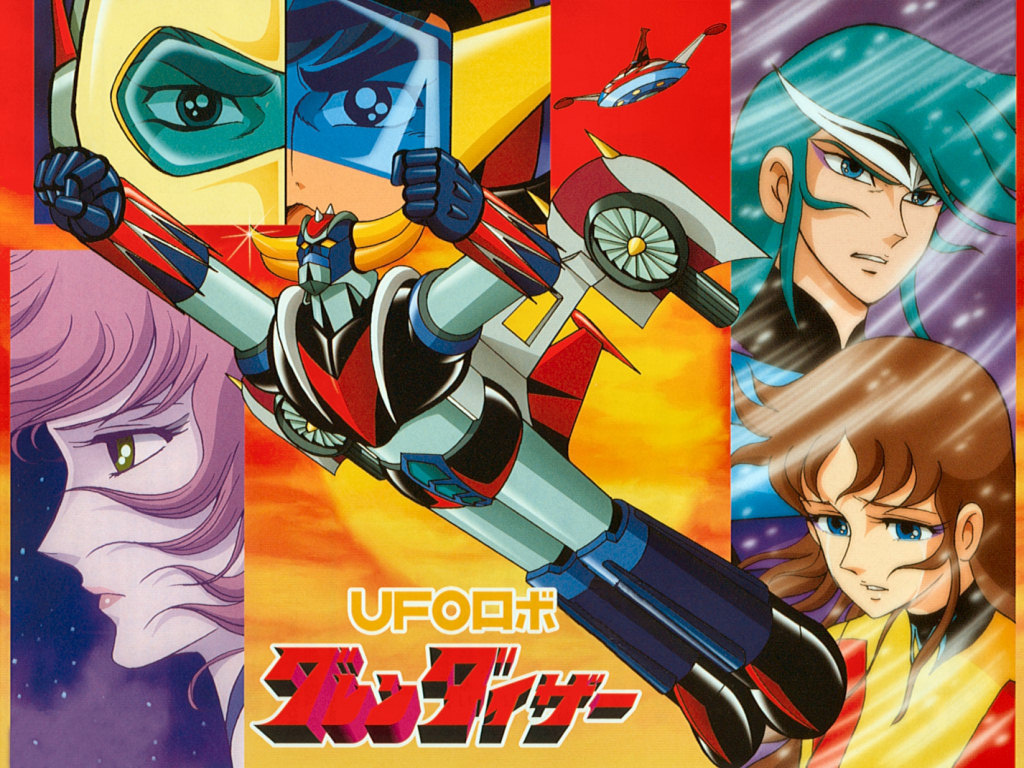
UFO Robot Grendizer


UFO Robot Grendizer [UFOロボ·グレンダイザー UFO Robo Gurendaizā?, sometimes romanized as UFO Robo Grendizer] is a super robot TV anime and manga created by manga artist Go Nagai. It is the third entry in the Mazinger trilogy. It was broadcast on Japanese television from October 5, 1975, to February 27, 1977, and lasted 74 episodes. The robot's first appearance in the United States was as a part of the Shogun Warriors line of super robot toys imported in the late 1970s by Mattel, then in Jim Terry's Force Five series, both under the title Grandizer. It is still widely popular in the Middle East, and it was especially popular in France and Quebec, as well as among French speaking Canadians in the province of New Brunswick, where it was aired under the title Goldorak. In Italy, the series was as popular and known as Goldrake.

source: wikipedia

Friday, September 21, 2012

Mazinger Z


Mazinger Z [マジンガーZ Majingā Zetto?], known briefly as Tranzor Z in the United States, is a Super Robot manga and anime series created by Go Nagai. The first manga version was serialized in Shueisha Weekly Shōnen Jump from October 1972 to August 1973, and it later continued in Kodansha TV Magazine from October 1973 to September 1974. In December 1972, the anime version premiered on Fuji Television. The TV series ended September 1, 1974. A second manga series was released alongside the TV show, this one drawn by Gosaku Ota, which started and ended almost at the same time of the TV show.

Mazinger Z is an enormous Super Robot, constructed with a fictitious metal called Super-Alloy Z [超合金Z Chōgokin Zetto?], which is forged from a new element [Japanium] mined from a reservoir found only in the sediment of Mt. Fuji, in Japan. The mecha was built by Professor Juzo Kabuto as a secret weapon against the forces of evil, represented in the series by the Mechanical Beasts [mecha used for evil purposes] of Dr. Hell. The latter was the German member of a Japanese archeological team, which discovered ruins of a lost pre-Grecian civilization on an island named Bardos [or Birdos, although some inconsistent translations have identified the island as being the actual Greek island of Rhodes]; the civilization was loosely based on the ancient Mycenae, and was called the Mycéne Empire in the series. One of their findings was that the Mycene used an army of steel titans about 20 meters in height [compare with the Greek legend of Talos]. Finding prototypes of those titans underground which could be remote-controlled and realizing their immense power on the battlefield, Dr. Hell goes insane and has all the other scientists of his research team killed except for Professor Kabuto, who manages to escape. The lone survivor goes back to Japan and attempts to warn the world of its imminent danger. Meanwhile, Dr. Hell establishes his headquarters on a mobile island, and plans to use the Mechanical Beasts to become the new ruler of the world. To counter this, Kabuto constructs Mazinger Z and manages to finish it just before being killed by a bomb planted by Hell’s right-hand 'man', Baron Ashura, a half-man, half-woman being. As he is dying, he manages to inform his grandson Kouji Kabuto about the robot and its use. Kouji becomes the robot’s pilot, and from that point on battles both the continuous mechanical monsters, and the sinister henchmen sent by Doctor Hell in every episode.

source: wikipedia

Friday, September 14, 2012

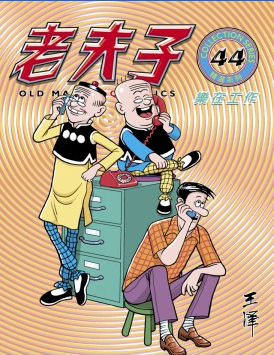
Old Master Q


Old Master Q [Chinese: 老夫子; pinyin: Lǎo Fū Zi] is a popular Chinese manhua created by Alfonso Wong. The cartoon first appeared in the newspapers and magazines in Hong Kong in 1962, and later serialized in 1964. The comic is still in publication today.

The series features the now well-known characters such as Old Master Q and Big Potato, as well as Mr Chin, Mr Chiu and Miss Chan, in many different hilarious situations. They are usually portrayed in a variety of social statuses, professions and time periods, ranging from beggars and office workers to actors and ancient warriors, allowing a wide variety of settings and ideas. More outlandish scenarios include close encounters with aliens, ghost sightings and the afterlife.

In the context of the strips, Old Master Q, Big Potato and Mr. Chin are close friends; Mr. Chiu often play an antagonistic role toward the trio; finally, Miss Chan is often portrayed as a love interest to Old Master Q. The comic is now copyrighted by WangZ Inc, a company established by Joseph Wong Chak [Alfonso Wong's eldest son] in Taipei, Taiwan.

source: wikipedia

links: 

Friday, September 7, 2012

Voltes V


Chōdenji Machine Voltes V [超電磁マシーン ボルテスV Chōdenji Mashīn Borutesu Faibu?, Super Electromagnetic Machine Voltes Five] is a Japanese anime television series that was first aired on TV Asahi starting June 4, 1977. It was created by Saburo Yatsude (a pseudonym referring to a committee within Toei Company) and directed by Tadao Nagahama. Voltes V is the second part of the Robot Romance Trilogy of the Super Robot genre which includes Chōdenji Robo Combattler V and Tōshō Daimos. Like Combattler V, the series was animated by Sunrise and produced by Toei Company. The series was animated by Sunrise on Toei's behalf. This super robot along with the other two aforementioned super robots first appeared the USA as a part of Mattel's Shogun Warriors line of import toys, released in the late 1970s.

Voltes V narrates the heroic exploits of the young robot pilots known as The Voltes Team and their trials against alien invaders from the planet Boazan. Armed with the Super Electromagnetic Machine Voltes V, the five pilots drive back the invaders one Beast Fighter at a time. The series is different from typical super robot anime of the time in that it illustrates human sentimentality and common values, with underlying themes such as the love of family, equality, selfless sacrifice, team work, and patriotism.

Voltes V is a work that has a heavy revolutionary undertone. The series ends with Voltes V's spectacular counterattack on planet Boazan to liberate the slaves from the oppression of a tyrannical ruler, Emperor Zu Zambojil. After Voltes V, Tadao Nagahama directed the TV anime version of Rose of Versailles, which leaves speculation that perhaps Voltes V was influenced by Nagahama's research on the French Revolution for his future project. The theme of enslaved population rising up to overthrow an aristocracy lend support to theory.

Voltes V's arsenal consists of variety of missiles, a bazooka, beams, and weapons such as Chōdenji Top [Similar to the Chōdenji Yo-Yo of Combattler V] and Tenkūken [天空剣 Sky Sword, "Laser Sword" in the English dub, "Excalibur" in the Italian dub]. With Tenkūken, Voltes V marks the enemy's final moments with a signature "V" slash. This established it as one of the first super robots to use a sword in its finishing attack.

Voltes V deviates from the robotic design of the Combattler V. Voltes V's plot has a more serious tone than the comedic storyline of Combattler V. Voltes V also follows a formula similar to that of Daimos.

source: wikipedia

links: many-faces-of-megumi-oka

Saturday, September 1, 2012

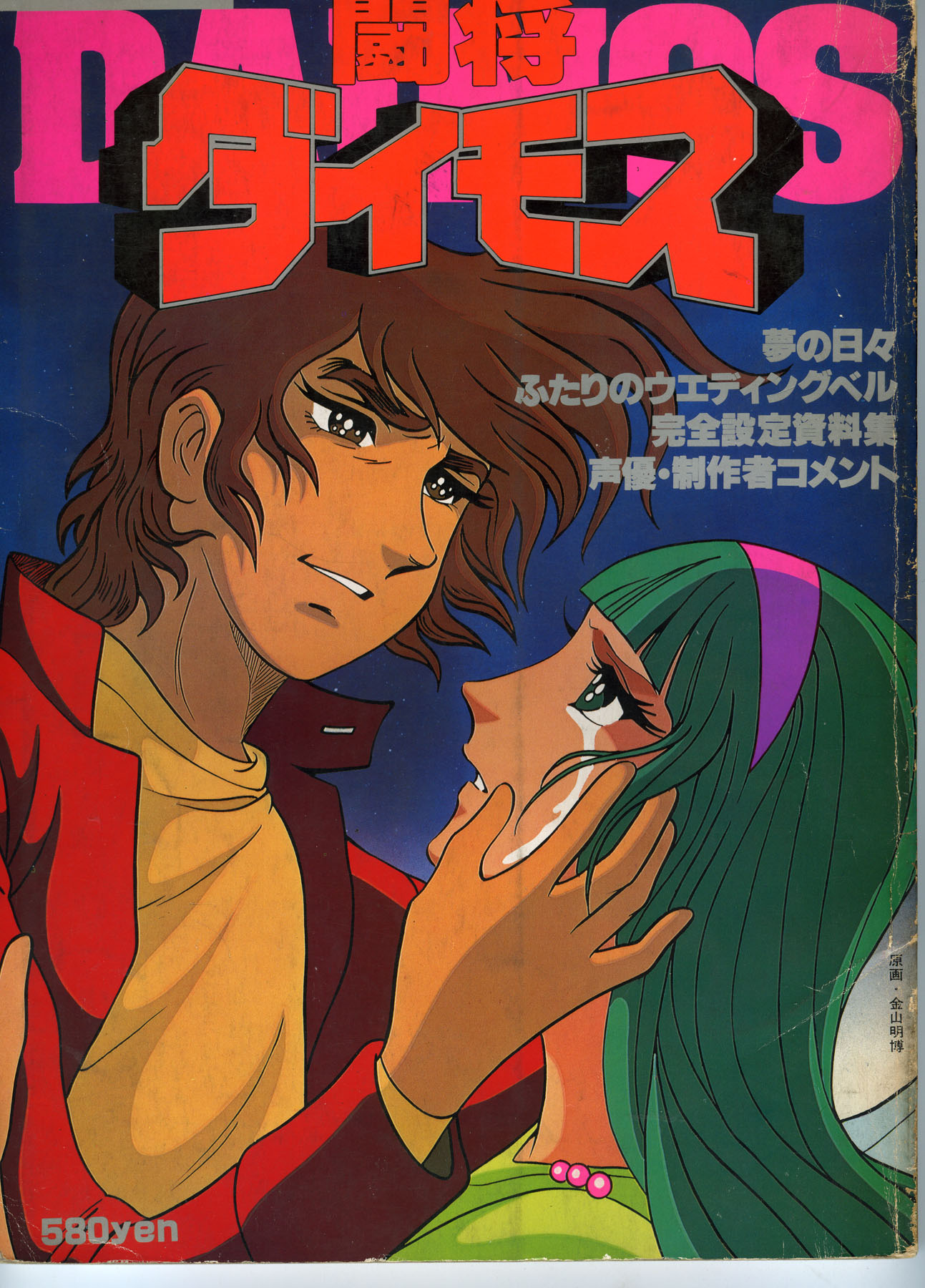
DX Daimos


Tōshō Daimos [闘将ダイモス Tōshō Daimosu?, Brave Leader (or Fighting King or Battle Commander) Daimos] is a Japanese anime television series produced by Sunrise. Daimos is the third installment of the "Romantic Trilogy", following Chōdenji Robo Combattler V and Chōdenji Machine Voltes V. It ran from 1 April 1978 to 27 January 1979 and consisted of 44 episodes. A movie with the pivotal episodes strung together titled Starbirds was released in the US by the same company that released Tranzor Z. The name Daimos is derived from Deimos, one of the two moons of Mars. Outside of Japan, the show also aired in the Philippines, Malaysia, Thailand and Italy. In the early 1980s there was a VHS release in France, but only the first seven episodes were available. In the 1990s, the entire series was shown in Poland [although with Polish voiceover, the Italian dubbing could be heard in background].

Tadao Nagahama, who directed the series, is often miscredited as the "creator" of the trilogy. It was actually created by "Saburo Yatsude," best known to American fans as the creator of Voltron [Golion in its original Japanese].

"Saburo Yatsude" is not a real person. Similar to "Hajime Yatate", the name is a pseudonym which refers to the collective staff of Toei Co. Ltd [specifically, the main Toei division, as opposed to the animation divisio]). The series was animated by Sunrise on Toei's behalf.

The first appearance of Daimos in the United States was in the late 1970s as a part of Mattel's Shogun Warriors line of imported Super Robot toys.

source: wikipedia

Thursday, July 12, 2012